All grains contain peptides that mimic morphine or endogenous opioid substances. This is where I deal with my latest loaf craving. Get your bread-based exorphin fix here.

Showing posts with label anadama. Show all posts

Wednesday, September 29, 2010

Reinhart's Whole Wheat Anadama Bread


Reinhart's Whole Wheat Anadama Bread

After trialing a few other Anadama loaves recently (Beard's, an Anadama experiment of my own, HBin5's), it was finally time to give Reinhart's Anadama recipe a try.

In addition to Reinhart's Anadama with cornmeal, I have also baked a loaf with corn flour.   All other ingredients and steps are the same.

The difference between Corn Meal (Left) and Corn Flour (Right)

Corn Flour
I picked up a bag of Maseca Corn Flour from a local supermarket, out of curiosity.  This corn flour was imported from Texas, and it is called an "instant corn masa mix".  'Masa' is just Spanish for 'dough', but it usually means 'cornmeal dough', and the cornmeal flour is used to make tortillas, tamales, pupusas, empanadas, corditas, arepas and sopes, all Mexican breads or dishes made with cornmeal or cornflour breads.
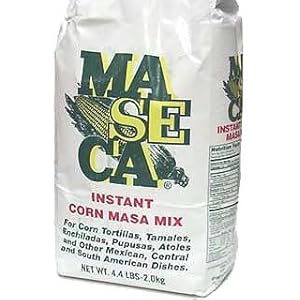

One of the customers who reviewed this flour for Amazon says you can't use it like other corn flour, it is only good for these Mexican flatbreads and dishes, but they didn't say why.  Why can't I use it in bread?  If I use it in an Anadama recipe, why will I fail?  I had all these questions.  I wanted to know. 

I was about to find out.

I generally have concerns about corn, because it is one of the grains that is grown using transgenic technologies.  Let me be clear: some corn is.  And how can I be sure that this corn is not modified by the latest gene splicing technologies?  In fact, I can't.  It doesn't specifically say that they do not use transgenic corn; and it doesn't say that the corn they select is organically grown.  It may have been grown using atrazine or other herbicides.  But I guess I was convinced (?stroked) by several reviews and by their online presentation.  By all accounts, I have here a quality product.

The bag of flour I purchased has a symbol on it to state that it is gluten free; and another symbol indicates that it is kosher.  The nutritive facts table gives the fat at 2%, the carbohydrates at 8%, the fiber at 8%, and the calcium and iron at 2% each.

The only ingredient listed is "selected corn treated with lime". I became curious about this added lime, and have been slowly educating myself.

Lime
Most people are aware that corn was a grain that was widely used throughout the Americas, and that it was taken back to Europe shortly after the new world was discovered.  There, it quickly found favour.  Of all the grains that are grown, corn seems to have the best ratio of yield to square footage required (1 bushel of this grain can be grown in 500 square feet, whereas a bushel of wheat requires about 1000 square feet, rye about 1500 square feet. [source: Emery, The Encyclopedia of Country Living (2003)]).  Landlords could suddenly feed their peasant tenants for less, thus seeing more profit.  But the sudden dependence on corn as a staple caused many poor people to develop pellagra.  In fact, our word from that disease comes from north Italy (Pelle Agra means 'sour skin', and is descriptive of one of the symptoms of the disease), where, presumably, they ate a lot of Polenta (that's what they call corn mush in Italian).  Soon, corn was regarded with suspicion.  Some even believed it contained a toxin, but it could never be proved. Eventually, conventional folk wisdom said that corn was acceptable to feed to pigs and chickens, but it was not grown for humans.  This is why we don't find, for example, too many German breads made with corn.  I would be hard pressed to find an authentic German Maisbrot or a bread similar to an Anadama.  Was der Bauer nicht kennt, das frisst er nicht.  Acceptance of corn in the diet in Europe came slowly, as more was learned about how the native Americans used it.

It turns out that corn, while being very nutritious, is by itself incomplete when it comes to providing enough vitamin B3, or Niacin.  The natives of the Americas generally prepared their corn with lime.  To loosen the husk, they would soak it in heated water with some ash or some limestone.  A simple rinsing then washes away the husk and the lime water; but the process has the added benefit of making the niacin in the corn bioavailable.

The Europeans and the Americans of the southeastern U.S. had to learn this the hard way.  Hundreds of thousands of people died in the early part of the twentieth century of pellagra.  Finally, vitamin B3 was found to be the key.  So in 1942, the U.S. Government mandated that Niacin be added to white flour, thereby preventing a large number of deaths due to pellagra.  Most of these deaths had been occurring in the southeastern U.S., where a lot of grits were consumed.  Grits is a porridge made from ground corn.  It is healthier when made from hominy, which is corn kernels that have been treated with an alkali like lime - and this is apparently how the First Nations people ate it.

Why put niacin in flour, though, which is made from wheat?  Well, it turns out that a deficiency of lysine can also cause pellagra.  And lysine is the one amino acid that you don't get enough of, if you are eating a lot of wheat bread.

So what kind of lime is added to corn flour?  Probably because of the green and yellow picture of a cob on the bag of corn flour I purchased, I was picturing in my mind some green, lemon-shaped, citrus fruit.  Nah-uh. 


Lime is our name for Calcium Hydroxide (Ca(OH)2); this is an inorganic compound, made from heating limestone (calcium carbonate) in water (a process called Nixtamalization). 

Calcium Hydroxide is commonly used in building, as ingredients in plaster and mortar.  But it has also been used forever in food processing.  Practically Edible has a good article on lime and its use in food.


Comparing Reinhart's Cornmeal Bread to the Bread made with Corn Flour
I think that the soaker using the corn flour could have used more water.  It seemed a lot dryer; the corn meal must not soak up as much water as the much finer corn flour does. However, I kept the same hydration for each.  I think it shows in the finished loaves: the official cornmeal loaf was bigger.


The Soakers are left at room temperature 24 hours


The Bigas were identical in ingredients.

 The Bigas are refrigerated 8 hours


I mixed the Official Reinhart Anadama dough first, and my experimental corn flour dough second.


Final Dough ingredients

Both of these doughs formed magically during the 3-4 minutes of kneading.  I am always amazed at the way these Reinhart doughs (from his book Whole Grain Breads) come together under your hands, when they have been mixed and then kneaded for 3-4 minutes.   Never have I been more amazed to see how it worked, than for this whole wheat bread with cornmeal.  The texture feels interesting, and it becomes a bread dough out of ingredients you wouldn't believe would become bread dough, in a matter of seconds, as if by magic.

The Cornmeal Dough

The Cornflour dough

My bigas were only out of the refrigerator about an hour and 10 minutes.  And you know what?  I think that actually made working with the dough by hand a lot easier.  The heat in your hands will change the consistency of the dough as you work with it, and frankly, I don't think it is always for the better.  If it is cool, it will likely take longer for the yeast to get to work, sure.  But if it remains cooler, it seems to retain its structure better, and makes it easier to work.  So we are experiencing a trade-off here.

The smell of molasses predominates as you squoosh the dough together through your fingers like mud pies when you were a kid.  Remember?

After the first rising, the dough made with Cornmeal (the one that followed the official Reinhart recipe) was spreading a bit more.  It was gooier, sagged more, and the gluten seamed to tear more easily at the surface. The one with the Cornflour was tight.  Again, this was probably entirely due to the hydration.  The corn flour could have used a bit more water.


 I folded them into a loaf tin as the recipe required, and baked them both at the same time.

This is supposed to change the texture of the crust

After I took them from the oven, I rubbed some butter on the one made with the corn flour, to see what that might do to the crust.  I read that somewhere, elsewhere.

Reinhart's Anadama Bread, and a version made with Corn Flour instead of Corn Meal

The next morning, my wife agreed to have a slice of one of the loaves.  I cut them both for picture-taking purposes, but didn't taste them myself for a few hours, because I was having some bloodwork drawn, and was not eating until after that (nothing serious, but we have a new doctor and she wants a baseline of data)She opted to taste the official Reinhart Anadama, simply because it was closer to her, not because it had a greater appeal. 

She toasted it and ate it with butter and honey.  Her verdict was that it was gritty in texture (due to the cornmeal) and yet delicate -- meaning, it felt like it might fall apart, but it didn't.  "It was pretty sweet too," she said, "and I'm sure it would have been sweet even without the honey."  But, she concluded, "it tastes okay."  Said with a shrug, that is a reluctant good review.

I could not convince her to do a real taste test.  She was simply not hungry after eating the first slice.  Under duress, she agreed to toast the second slice and take a bite.  "What's the difference?" she wanted to know as it toasted.

"This one should not be as gritty," I offered by way of explanation.

Dutifully she toasted it up and put honey on it as she had done before.  I was hoping that, after one small bite, she might be enticed to eat the whole slice.  But it was not to be.
The cornflour bread, made Anadama-style, is not an Anadama bread but an experiment

She turned to me and actually spat the lump of dough from her mouth to her hand.  "It turns into this lump of mush in your mouth," she said, shaking her head.  "If this were served in a restaurant, people would say, "what is that?  Why does it taste like that?  It looks like it is cooked, but something is wrong.'"

She concluded, "The cornmeal bread is still better."

We were preserving some grape juice yesterday, and it has stained this bread board a lovely purple.

When I finally did come to eat both of the breads, I could detect no real difference other than the texture or mouth feel.  To me, they both taste okay.

But I say that with a shrug.

Notes to Myself
  • If you fortify flour with Niacin, why doesn't baking with it destroy the vitamin?  If you add Niacin to your dough that is not so fortified, what will happen?
  • Use a bit more water if you use cornflour instead of cornmeal for your soaker, for loaves using this recipe.
  • But I think we can conclude, from this experiment, that you won't be using corn flour for Anadama bread any more.  Stick with the cornmeal.  There is a reason why cornmeal and not corn flour is used.

Tuesday, September 21, 2010

Musings, and Everyday Bread #68: Anadama Bread from HBin5

Anadama Bread

I made these two loaves to rid myself once and for all of the "Healthy Bread in Five Minutes a Day" Anadama dough that I used in yesterday's pizza.  One loaf I made as the recipe indicated, i.e. as a freestanding boule; the other I put into a casserole dish and baked covered, the way Lahey suggests for his loaves.  The freestanding loaf spread sideways too much -- that seems to be the common fate of all the breads I make using the "Healthy Bread in Five Minutes a Day" recipes.  The other loaf fared better, although it was rolled in cornmeal and that is basically the taste of the crust now.
I form a boule and put some other dough in a couche-lined basket

The free-standing loaf spreads sideways too much in the 90 minute proofing

Upside-down into the casserole dish

Both of these loaves are kind of flat

I don't care for either of these loaves.  I hope that Reinhart's Anadama bread that I'll be baking next is somewhat better.


 These loaves both have quite a yellow crumb: this night shot doesn't do them justice.


Notes to Myself
  • Cranky Musings
    The lousy bread is making me cranky.  I've been overthinking things.  The past week or so has been the time for a lot of musings on bread.  This is partly because I have been tasting bread that others have made, not just my own.  Each time, there was cause for reflection.  Here are a few rules or insights I've come up with.
  • Bread Snob
    My brother-in-law invited my wife and I for lunch last weekend, and he baked some nice rolls using some rye flour.  He asked me how I liked it.  Perhaps he noticed that I had two.  "It was good," I told him.  But then I added, "Perhaps a bit salty." 

    On the way home, I sheepishly turned to my wife, and confessed what I had said. "Have I become a bread snob?" I asked her.

    "Yes," she said.

    I felt contrite the whole way home.

    I should know better.  I once lost the online friendship of someone whose opinion I value highly when I inadvertently dissed her bread.  I didn't even directly say anything negative about her bread, but she took great offence at what was implied and has not spoken to me since.


    Rule #1 in learning to get along with other bread makers: never diss someone else's bread.
    Corollary: Never diss another culture's bread, this can be construed as a great insult.

    But here is the thing: when you begin making your own bread, and moving toward the elusive perfect loaf, or best taste, you run the risk of going against the cultural norm, or changing your own personal tastes such that other people's bread becomes somewhat lacklustre. Refined by your unique individuality, your bread becomes a sine qua non ("that, without which, it is nothing"), which oftentimes other people cannot eat or do not like.  In short, you become a bread snob.  Even without meaning to.

  • Crust Frustrations
    My wife had my mother-in-law for lunch the other day and offered her some of the Haferbatzen I recently made.  Now I really like the taste of this loaf, and the texture of it.  It is chunky, and has lots of really excellent whole grains in it.  But my mother-in-law complained, "Why does he always make bread with crust that is so tough?  Can't he make a bread that has a soft crust?"  This is a good question, especially from someone who once broke a tooth on one of my breads.

    My wife carefully explained to her that the reason I make breads like this is because I like breads like this.

    In fact, I can't buy anything like this, I have to make my own.

    Giving her a knife and fork to cut off the hard oatmeal crust, my mother-in-law was able to at least try the interior of the bread.  There were no raves from her, but she was somehow able to choke it down by cutting it into small sized bites.  Fortunately, the whole rye grains in the interior had been soaked long enough that apparently they gave her remaining teeth no trouble.


    Rule #2 in learning to bake your own bread: don't try to please everybody, you will fail.
    Corollary: "The People's Bread" or "Bread for the masses" or "Everybody's Loaf" will please no one.

    The old Ricky Nelson song says it best: "You can't please everyone, so you've got to please yourself."

  • Taste Tells
    We were fortunate enough to visit my son in Hamilton last week, and we supped at 'The Bread Bar',  where they make some interesting breads for sale during daylight hours, and they bake some lovely pizzas for patrons in the evening. 

    Three of us shared two medium sized pizzas, a supposedly wild mushroom pizza, and one made with goat cheese.  They were pretty good.  Although I asked our waiter what kind of mushroom it was, and was told it was a 'Foraged Mushroom'.  In other words, he didn't know.  I suspect that someone had been foraging at the local grocery store that day.

    For the table, we also got a couple of bowls of their pizza-crust dipping sauce.  One of these sauces was a smokey-flavoured tomato sauce, and my wife was particularly taken with it.  They would not sell it to us, and claimed the recipe was a secret, so we ended up making our own, from a couple of different recipes found on the internet.  I spent most of the afternoon smoking some Italian Roma tomatoes on the backyard open fire cauldron, with a roasting pan over it to catch the smoke.  My wife put together the sauce later with garlic and other ingredients, making it to her taste, and it does taste very nice.  Because we made it ourselves, it is special.

    I was especially curious about the Bread Cafe's Red Fife Loaf, and we took some home with us.  I ate it alongside the Landbrot, the first loaf I made from Nils Schöner's Bread Recipe book, "Brot".  I liked the bread I made better than the Red Fife loaf.  I suspected that their Red Fife Bread was only partially baked with Red Fife Wheat flour, probably about 40% worth; the rest must have been ordinary all-purpose flour.  There was only enough of the very expensive red fife wheat flour to change the colour and add a hint of flavour.  This was not a whole grain loaf by any stretch of the imagination.  It was good, and it was better than anything you might ever buy in a grocery store.  It was better than 99% of the breads for sale anywhere.  But it still was not as good as a loaf I can make myself.

    The point is, when you begin to make your own bread, you begin also to train your tastes, and can thereafter begin to determine what it is you are eating even when you don't personally bake the bread.


    Rule #3 in baking your own bread: When you change what you eat, what you eat will change you.
    Corollary: If you don't change what you eat, no change is possible.

    One could argue the early history of a religion like Christianity purely from a change in diet.  The earliest followers of Jesus changed their diet from the start: Jesus set the example to never refuse a meal that was offered.  "When you go to a town, eat what is presented".  Of course, he was going only to Jewish households.  He taught his disciples to relax some of their rigid dietary regulations, but then told them to "Beware the leaven of the Pharisees."  I won't go into the obvious parallels here with the Jewish traditions of using unleavened bread, as a remembrance of the Exodus.  It was merely yet another way for Jesus to indicate that he and his disciples were moving away from the religious ways of what then constituted the norm.  After his death, the Gentiles among the early followers began to proliferate, and Peter's dream that all animals could be eaten was a complete departure from normative Jewish dietary law.  But the early Christians drew the line at eating meat that had been sacrificed to pagan gods.  And so they ran afoul of the both the Jewish communities and the Gentile communities in the cities where they settled, because they began to threaten those communities, whose food (mostly meat consumption) was somehow tied to the sacrifices to the local god of choice.  The Christian refusal to eat these sacrificed foods went so far as to threaten some of the economies of the cities they lived, and thus upset the balance there.

    The Romans were known as 'porridge eaters' by the tribes that they encountered and began to defeat in their military conquest -- that is, until they learned from the Greek speaking countries that they conquered how to bake bread.  Then, using bread, they enlarged their armies and conquered much of the known world.  Long before Napoleon said "an army moves on its stomach," this was understood by Caesar and every great Roman general.  Bread enabled soldiers to move quickly on well-engineered roads of grain supply.

    A change in diet can either express or inaugurate a great spiritual transformation.  Many people who suddenly become filled with compassion for other life forms become vegetarians or vegans.  The extreme case of this is a follower of the Jain religion who refuses to ingest anything anymore, and so starves to death, arguing that he or she is no better ultimately than the fruit or vegetable or animal that might sustain them.  Other examples that might be found are Mother Teresa, who refused to eat more than the poorest person in Calcutta, or Ghandi, who simplified his own diet as an example for a nation.


    Lemma (a): if you control what a people eats, you have full power over that people.

    Note that in our modern world, the farmer often no longer has control over his own seed, or her own land.  Indeed, most of us have very little say over what goes into our own mouths.


    Lemma (b): if you don't control what goes into your own mouth, someone else controls you.

    Appetite is something we must have self-discipline over.  I recently saw "Scott Pilgrim vs the World", a fun movie.  In the middle of the show, Scott makes some bread for his new-new girlfriend.  There is the following exchange between Ramona V. Flowers (Mary Elizabeth Winstead) and Scott Pilgrim (Michael Cera).  Cera's face when he says these lines is priceless.  He is everyman, who knows nothing, least of all himself.


    Ramona: This is actually really good garlic bread.
    Scott: Garlic bread is my favourite food. I could eat it for every meal. Or just eat it all the time without even stopping.
    Ramona: You'd get fat.
    Scott: And why would I get fat?
    Ramona: Bread makes you fat.
    Scott: Bread makes you fat?


  • Exorphins
    It takes a great deal of discipline to change one's diet, and it takes even more discipline to regain some sort of self-control over consumption when you are learning again to appeal to your own true tastes.  This is going to be even more challenging, if it is true, as they say, that certain grains contain exorphins that will appeal to your reward centres.  You become an exorphin junkie: it is not just that you say "I want" this grain, you crave it so that you say "I need" this grain.  It is the obsession with bread that gets into your blood that you have to continuously be on guard against.

    This is my story, but it could be yours: one day you wake up, realizing that everything you've been eating is swill.  You decide that you aren't going to take it any more.  You begin to change what you think is the staple in your diet, and you experiment to find out what your true tastes are (you don't know what your true tastes are, because you have been raised to think that everything you can eat is swill).  You begin chasing an elusive ideal taste that you have never yet tasted, but somehow you know is out there.  The quest becomes an obsession; ultimately your own appetite becomes dangerous to those who seek to control the culture that you live in, by offering up only swill.  But how do you know when your appetite is out of control, and controls you?  If you have abandoned the norm (swill), how will you know when you reach the ideal?


    Rule #4: Cultural norms exist to curb natural appetites.
    Corollary: When you no longer control what you eat, but it controls you, you are a slave to your appetite.

    What are you a slave to?  Are you enslaved by those that offer you swill?  Are you a slave to your own taste and appetite?  Or are you enslaved by the grain itself, which contains minute amounts of narcotic that appeal to your reward centre?  Bob Dylan said, "You're gonna have to serve somebody." 

    Who will you serve, with your bread?

  • Cold Turkey
    I have been conversing with a Great Soul from Australia who chanced upon my blog and read my initial posting about exorphins (I was as surprised as anyone that someone read one of my blogs), and my brief discussion of Wadley's and Martin's thesis on the origins of human culture.  This correspondent pointed me to another article about the origins of agriculture in the fertile crescent (Hillman et al. (2001) New evidence of Lateglacial cereal cultivation at Abu Hureyra on the Euphrates), which suggests that rye was the earliest domesticated grain, not wheat; and it was not the exorphins that precipitated the shift to agriculture, but rather a long period of aridity during a dramatic climate change.  The article did say, however, that the exorphins of the domesticated grain ensured that the shift to sedentary farming communities would be an irreversible change in human culture. 


    The original Exorphin Junkie blogger

    That would suggest, in essence, that all humans, from the time of the first farmer, have been enslaved by the grains that they eat.  Lierre Keith, the author of the book "The Vegetarian Myth: Food, Justice and Sustainability" has even gone so far as to suggest that grains have used their exorphins to get from us what they want, which is to become the dominant plant life form on the planet.

    But the shift to monocrop agriculture from humanity's previous hunter-gatherer status took place in many areas of the world, and exorphins were apparently not involved in all of those areas: rice, for example, has no exorphins, so areas where this grain was first domesticated did not have this problem to contend with when they were choosing their staples.  This would seem to refute Wadley and Martin's thesis.  But it doesn't refute the fact that the exorphins are there in our staple grains.  Ever since Takahashi, Fukunaga, Fukudome and Yoshikawa discovered the first gluten exorphins sometime around the year 2000, we have been learning slowly about what these tiny peptides are doing to us. 

    I have read a few articles by other scientists who are working on learning more about the exorphins.  The exorphin peptides are part of the gluten.  They can be found in the bloodstream after ingesting products with gluten.  They may cross the blood-brain barrier, at least in some people; or they may cause other molecules to so cross the barrier.  For that reason they are garnering a lot of attention by pharmaceutical companies who look to them as a possible drug-delivery system.  The exorphins seem to have a role in the satiation response.  They apparently also trigger insulin production from the pancreas, once they are in the bloodstream.  Their effects can be reversed with Narcan, an opioid antagonist drug that is given to people who have overdosed on narcotics.

    But basically, we just don't know much about them.

    How do we regain some sense of control over what we eat?  Is the consumption of grain (individually or world-wide) indeed irreversible?  Can we (should we) go cold turkey, and get off the grains?

    The Great Soul I was speaking with also pointed me to the writings of Masanobu Fukuoka, one of the pioneers of the Sustainable Agriculture movements.  I have now been reading one of his books, the out-of-print text, "The One-Straw Revolution: an Introduction to Natural Farming" (1978).  Fukuoka's greatest insight can be summed up thus:


    "Humanity knows nothing at all.  There is no intrinsic value in anything, and every action is a futile meaningless effort." 
    Fukuoka was a genius.  If he knows nothing, the rest of us know even less.


    Rule #5: You will never know definitively anything about what you eat.
    Corollary: Your beliefs about what you eat are inconclusive and most certainly mistaken.

    In the exchange of emails with this Great Soul, I have admitted that I have questioned whether the end result of my bread-baking blog might be to give up grains (or perhaps just glutenous grains) altogether.  The more I learn about grains, the more I wonder if indeed they are truly healthy.  I know that I want them, and I need to eat something, and I am trying to make it whole grain: but frankly, I do not know what I am doing.  I don't know that whole grains are good for us, I don't know that any grains are good for us.

  • The True Cost of Bread
    The purchased red fife bread at the Bread Bar was a very tiny loaf, and expensive.  If I add up all the rustic loaves I've made over the past year, and multiplied it by the amount we spent on this one bread, I guess I've saved a lot of money.  On the other hand, one would have to factor in all the money spent by me not only on flour and other ingredients, but also on electricity to get my oven hot, or the tools that I've purchased and used to bake with, not to mention the time I have spent trying to learn how to make a good loaf.  Maybe I haven't saved all that much money after all.

    I hear the same voice of a co-worker, who replied, when I suggested she start a vegetable garden, "It's not practical."  Baking bread at home is also not practical.  You don't do it because you have to anymore, or because it is more practical.  You do it for other reasons: taste, health, self-respect, self-control, curiosity, for fun, for anarchy, or any other number of reasons.


    Rule #6: You cannot measure the true cost of bread, there will always be something left out of the ledger.
    Corollary: The value of bread is immeasurable.

    Do we value bread because it is life, or because we believe it is life?  How do we evaluate bread's worth?  What are the hidden costs of ingesting wheat and other grains as a staple in the diet?  Are there health costs?  Environmental costs?  Cultural costs?

    Bread or its absence has sparked revolutions.  If you value peace, you will give the poorest person bread.  If you want to elicit revolutionary change, or terrorism or anarchy, deny someone their bread.

  • Reconstructing the Whole Grain
    Although it may not be practical, there are many advantages to baking one's own bread, not the least of which are taste, and health.  By baking my bread at home, I have been able to control more of my own ingredients.

    The flour that comes from our modern mills is very highly regulated by government overseeing bodies.  Recently, because I have been trying to find out exactly how our Canadian flour differs so much from German flours, I have been examining these regulations

    The point of the regulations is supposedly for health purposes of the population who uses the flours.  This has been beneficial, for example, in reducing the incidence of pellagra and beriberi in the western world.  What it means is, if a mill is going to take out the bran and germ from a grain, they must fortify the flour before they can sell it.  There are mandatory fortifications, and there are still more regulations over bread additives that are not mandatory but are considered elective.  And finally, there are some ingredients which mills and markets are forbidden to add.  The list of what is required, what is allowable and what is forbidden continues when the flour is used by bakeries.  In short, there is a whole list of flour and bread additives that I am only just beginning to learn about.  For the most part, these things do not have to be added to whole grain flours: the theory being, if you take nothing out, you do not need to put some things back in.


    Rule #7: The farther you step from the whole grain, the more adulterated and less healthful and tasty the final result.
    Corollary: No amount of reconstruction will fix a grain that has something removed from it.

    I hope to put together a file listing what is known about the various common flour and bread additives.  The task is huge, though, and that is why my meagre beginnings have not yet been posted.

  • No Conclusion
    So the recent thoughts I've been having about bread, and the recent experiences I've had with bread baking and bread consuming, have taken me to this moment.  I have come up with some generalized rules, which are not in fact rules or even theorems, but just some general thoughts that identify where I am at this moment in my quest for the perfect loaf.

    While the rules in this article are not earth-shaking, by writing them down, they do indicate where my thoughts and experiences have taken me lately.  They are not conclusions.  In writing them down, I am merely able to examine some of my postulates or assumptions, which I have not, before now, fully understood, and am only now beginning to question (the way Bolyai and Lobachevsky began to question the inviolable truth of Euclid's axioms, and so developed one of the first non-Euclidean geometries).

Monday, September 20, 2010

Pizza #10: Anadama Pizza with Mushrooms and Fresh Tomato

Anadama Pizza with Mushrooms and Fresh Tomato

I was planning on making some Anadama bread from the people who have given us "Artisan Bread in Five Minutes a Day" and "Healthy Bread in Five Minutes a Day".  But I figured that would be far too much Anadama bread for me to take.  I elected to try it, and see if the dough could be used in a pizza recipe.

I decided it can't.  The taste is not good enough for pizza.  It is not that it tasted bad.  It just had no appreciable taste at all.

The dough mixes up easily with a spoon

It takes only 70 minutes for the dough to double today

I mixed up the dough following the recipe in 'Healthy Bread in Five Minutes a Day", and based on the ingredients I weighed, this is the baker's percentage that I came up with (your mileage may vary):

IngredientwtBaker's %
WW Flour262g 36%
AP Flour458g 64%
Yeast20g 3%
Corn Meal262g36%
Salt9g1.25%
Vital Wheat Gluten40g5.5%
Molasses159g22%
Water857g119%
Wheat Germ26g4%


Notes on the percentages: This dough is well hydrated.  I was able to stir it up until all parts of the dough were wet, using a wooden spoon.  But the 119% hydration content is deceiving.  Probably one should include the Corn Meal into the Flour amounts, so that the total flour content is 982g.  This would make the water 87% of the total.  But Corn Meal is not flour.  It doesn't act like flour.  It does absorb some of the water, though, so the hydration percentages are just not as helpful in this recipe.

Just from looking at the other Anadama recipes I've tried, this one has a lot more ap flour, and a lot more molasses, and a lot more yeast.  I suppose it has a lot more corn meal too.  But based on all that, I didn't think I'd like it.  Still, I was hoping I would be pleasantly surprised.

I wasn't.  As a pizza dough, this was particularly tasteless and disappointing.  To be fair, the authors never intended it to be used as a pizza dough.  I was improvising.

First time ever to try out my new firebricks in the gas barbecue

I was trying out my new fire bricks, in the gas barbecue.  I think it took substantially longer for the temperature to rise, using these fire bricks: there was more mass to heat.  So this is actually quite a wasteful procedure.  On the other hand, the pizza cooked just as fast, once the bricks were heated to about 700 degrees.  I left this pizza for about 15 minutes this time, and it was starting to just singe around the edges.  But the toppings were well cooked.  I still had a problem, with this stone, with the oil soaking into the stone rather than providing a nice smooth surface.  It gets better every time I use it, but it is still not good.

The toppings:
  • Pizza Sauce
  • Mushrooms
  • Fresh Diced Tomato
  • Dried Italian Herbs Seasoning
  • Chipotle Chili
  • Dried Chili Peppers
  • Minced Garlic
  • Kalamata Olives
  • Mozzarello Cheese
  • Grated Italian Padano Cheese
Despite the chili peppers, there was virtually no taste to this.  And there simply were not enough of the chili peppers.

The dough easily gets molded to the right shape of the pizza stone

The Italian Padano Cheese is a nice cheese, but it doesn't have enough flavour to carry this pizza


The fireplace takes substantially longer to reach 700 degrees with the firebrick: about 40 minutes!

If you don't lift the lid, and can trust the process, pizza is done in 15 minutes.

The olive oil is still soaking into the stone too much, so the dough continues to stick.


I will bake the bread with the rest of this dough tomorrow.


Notes to Myself
  • Continue to cure this baking stone with oil each time you bake with it, so that the stone will no longer soak up the olive oil each time you use it for pizza.
  • The time taken to preheat the firebrick is prohibitive and wasteful of propane.  Therefore, if you must do it, try baking other things besides just the pizza on the hot stone.  For example, have some bread ready to bake, too.
  • Padano Cheese isn't strong enough for pizza
  • Anadama dough isn't the right kind of dough for pizza